
📋 Table of Contents
- 1.Understanding Supermarkets in South Korea: A Unique Definition
- 2.The Birth of Supermarkets: A Glimpse into South Korea’s Early Days
- 3.How Supermarkets Grew: The 1970s Apartment Boom
- 4.The Self-Service Revolution: Changing How Koreans Shop
- 5.Supermarkets vs. Local Stores: Why Koreans Love Them
- 6.The Rise of Convenience Stores: A New Era of Shopping
Hey everyone! Have you ever walked into a supermarket in South Korea and felt like it was just a little bit different from what you’re used to? I know I have! It’s like they have their own special vibe, isn’t it?
Well, believe it or not, supermarkets in South Korea actually have a really interesting history and a unique meaning that sets them apart from stores in other countries. It’s more than just a place to buy groceries; it’s a reflection of the country’s fascinating shopping culture.
From their humble beginnings catering to foreigners to becoming a staple in every neighborhood, these stores have truly evolved. So, let’s take a fun journey together and explore the world of supermarkets in South Korea!
Key Takeaways About Supermarkets in South Korea
Understanding Supermarkets in South Korea: A Unique Definition
When we hear the word “supermarket,” many of us might think of huge stores like Walmart or Target, right? Places where you can find absolutely everything under one roof, often called hypermarkets.
But in South Korea, the term “supermarket” actually has a slightly different meaning! It refers to a retail store that’s bigger than a small corner shop (what Koreans call a ‘gumoongage’ or ‘mom-and-pop store’) but not quite as massive as those huge hypermarkets.
Korean Supermarket vs. International Definition 📝
- International: Typically means a large, self-service store offering a wide range of groceries, household items, and more, often similar to a hypermarket.
- South Korea: Refers to a mid-sized retail store, larger than a local small shop but smaller than a massive discount store. It’s perfectly nestled in between!
This difference isn’t just a quirky detail; it really shows how South Korea’s unique distribution system and consumer needs have shaped its shopping culture over time. It’s a fascinating local twist on a global concept!
The Birth of Supermarkets: A Glimpse into South Korea’s Early Days
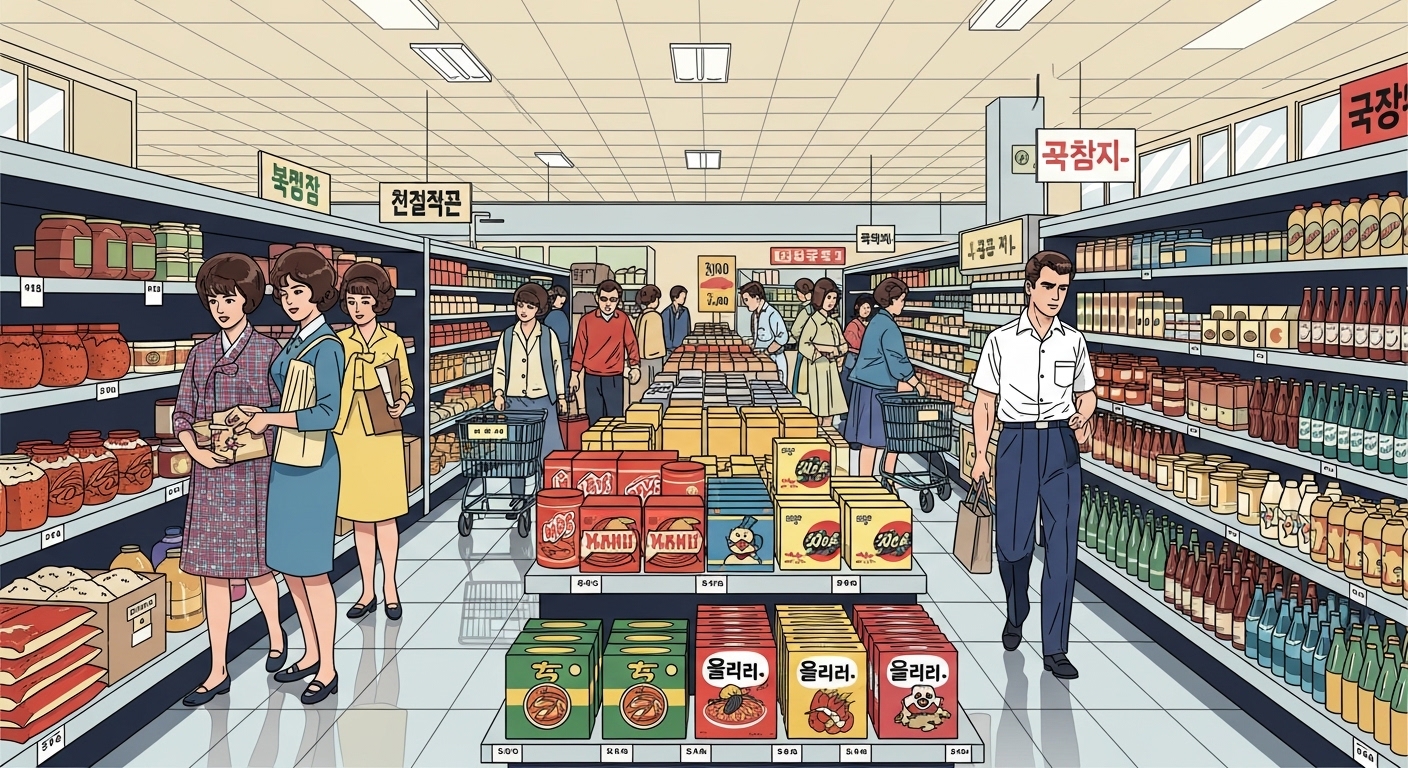
Customers exploring an early Korean supermarket, showcasing various products.
You might be curious about when these modern stores first arrived in South Korea. Well, the very first supermarket, called ‘Hanguk Supermarket (한국 슈퍼마켓)’, opened its doors in October 1964 in Hannam-dong, Seoul.
Interestingly, this initial store was mainly for foreigners! It even had the President and First Lady attend its opening ceremony, which shows how big a deal it was at the time. However, the real “supermarket era” for everyone started a few years later.
- 1964: ‘Hanguk Supermarket (한국 슈퍼마켓)’ opens in Hannam-dong, Seoul (initially for foreigners).
- 1968 (June 1): ‘New Seoul Supermarket (뉴서울 슈퍼마켓)’ opens in Seodaemun-gu, marking the beginning of the local supermarket age.
- 1968 (August): ‘Sampung Supermarket (삼풍 슈퍼마켓)’ opens in Euljiro, further solidifying the supermarket trend.
From 1968 onwards, more stores like Sampung Supermarket (삼풍 슈퍼마켓) and Nakwon Supermarket (낙원 슈퍼마켓) began to pop up, truly kicking off the supermarket revolution across the country. It was a big step towards modernizing how people shopped!
How Supermarkets Grew: The 1970s Apartment Boom
The 1970s was a really important decade for South Korea. The economy was growing, and cities like Seoul were changing rapidly, especially with the rise of massive apartment complexes in areas like Gangnam.
This new way of living, with more people in modern apartments, created the perfect environment for supermarkets to spread. People’s living standards were getting better, and they wanted more convenient and modern ways to shop compared to the traditional markets.
Factors Driving Supermarket Growth in the 1970s 📈
- Urbanization & Apartment Living: New apartment complexes in areas like Gangnam created concentrated populations needing convenient shopping.
- Improved Living Standards: As people earned more, they sought modern, efficient shopping experiences.
- Government Policy: The government actively supported the modernization of the distribution system, encouraging supermarket development.
- Emergence of Chains: Stores like Nongshimga (농심가) and Newcore Supermarket (뉴코아 슈퍼마켓) started forming chains, becoming popular in neighborhoods.
It’s pretty cool to think that these stores weren’t just popping up randomly; they were part of a bigger plan to modernize the country’s shopping scene and make life easier for everyone!
The Self-Service Revolution: Changing How Koreans Shop
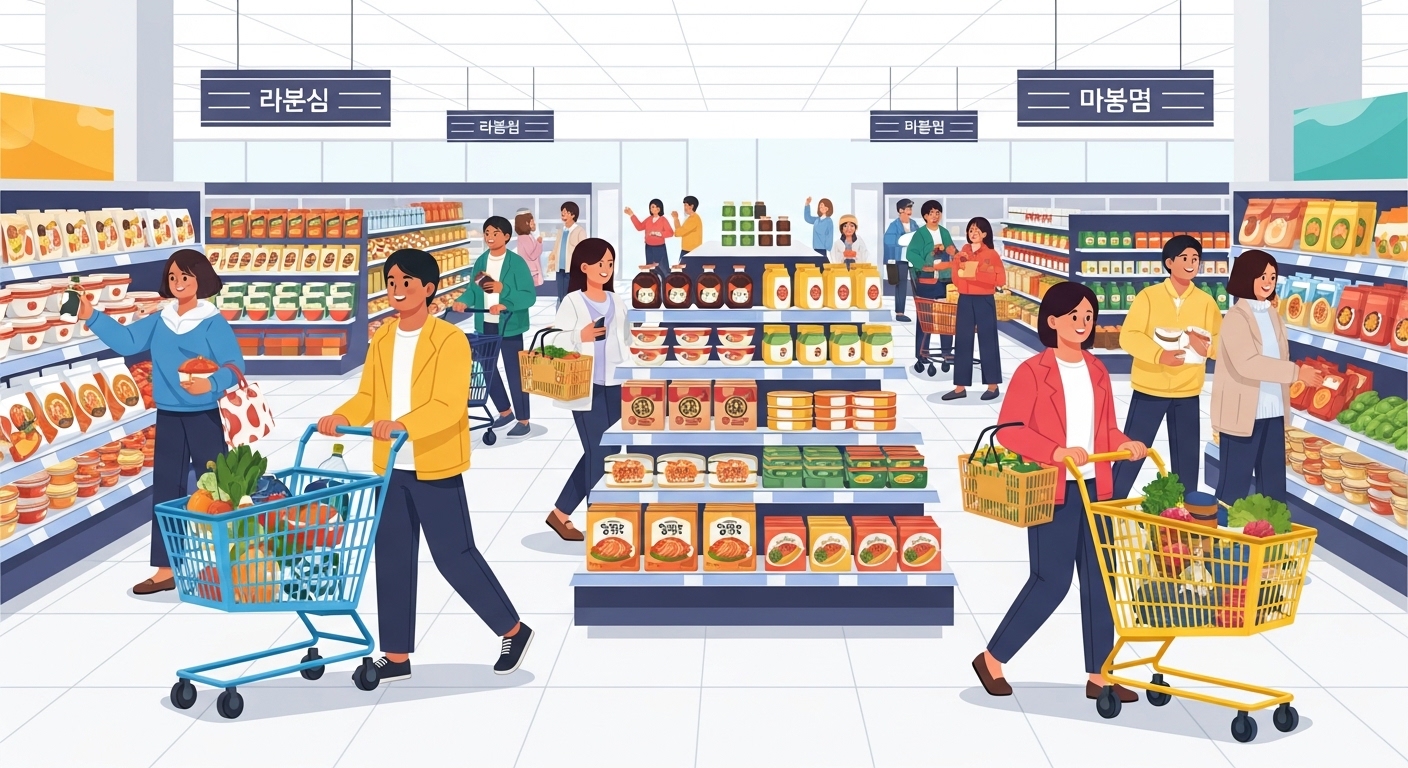
A person happily pushing a shopping cart down an aisle, choosing products.
Before supermarkets became common, shopping was a very different experience. You would tell a store clerk what you wanted, and they would go get it for you from a back room, then you’d pay.
But supermarkets changed all that! They brought in the self-service model, which is what we’re all used to now. Shoppers could grab a cart or a basket and choose their own items, exploring the aisles freely, before heading to the checkout counter.
- More Enjoyable: Shoppers gained the freedom to browse and discover new products, making shopping a more pleasant activity.
- Cost-Effective for Stores: By having customers select their own items, stores could save on labor costs, making operations more efficient.
- Wider Selection: The open display system allowed for a greater variety of products to be easily accessible to customers.
This shift was huge! It didn’t just make shopping more fun for us, but it also helped stores operate more efficiently by reducing costs. It really redefined the consumer experience and helped to popularize processed and convenience foods that were becoming increasingly popular in the 1980s.
Supermarkets vs. Local Stores: Why Koreans Love Them
So, why do supermarkets in South Korea (often called SSMs for Super Supermarket) hold such a special place in people’s hearts? It’s all about convenience, quality, and often, better prices!
Many local residents find that these mid-sized supermarkets are usually better than the smaller, traditional neighborhood stores when it comes to a few key things. It makes sense, right? Bigger stores often have more resources.
Why Koreans Prefer Supermarkets (SSMs) 🌟
- Convenience: Often located within residential areas, making them easily accessible.
- Friendliness: Many stores focus on customer service to build community loyalty.
- Cleanliness: Generally perceived as more hygienic and organized than smaller, older shops.
- Price Competitiveness: Can offer better deals due to larger purchasing power.
- Community Contribution: Many residents feel SSMs contribute positively to their local community.
It’s clear that when a new supermarket opens in a neighborhood, people are usually very happy about it because it just makes daily life so much easier. This strong preference highlights the dynamic nature of South Korean shopping habits!
The Rise of Convenience Stores: A New Era of Shopping
Even though supermarkets brought a lot of convenience, people eventually wanted something even *more* convenient. And that’s where convenience stores come into the picture!
Think about it: supermarkets were great, but what if you just needed one thing late at night, or on a holiday? That’s the gap convenience stores filled, offering 24/7, year-round service. They shifted from being food-centric to focusing on a wider variety of daily necessities in smaller quantities.
Key Features of Convenience Stores 🏪
- 24/7 Operation: Open all day, every day, providing ultimate accessibility.
- Product Focus: Concentrates on daily essentials and small-sized goods, not just food.
- Early Entrants: Companies like Circle K, Lawson, Family Mart, LG25 (now GS25), AMPM, and Ministop pioneered this new retail format.
The arrival of major brands like Circle K (써클K) in partnership with Hanyang Distribution (한양 유통) in the late 1980s, followed by others, truly launched the golden age of convenience stores in South Korea. It shows how the country’s retail landscape is always evolving to meet new demands!
Wow, what a journey through the world of supermarkets in South Korea! We’ve seen how they started, evolved, and even paved the way for the convenience stores we love today. It’s truly a story of adaptation and innovation to meet the ever-changing needs of shoppers.
From their unique definition to their role in modernizing shopping, these stores are a vibrant part of South Korean culture. I hope you had fun learning about it! If you have any more questions or want to share your own experiences with Korean supermarkets, feel free to leave a comment below!