
📋 Table of Contents
- 1.In Search of Serenity: My Personal Quest for Quiet in Insadong
- 2.Insadong: A Blend of Tradition and Bustle
- 3.Finding My Haven: A Traditional Hanok Tea House
- 4.From City Roar to Gentle Whispers: The Sensory Journey Inside
- 5.The Art of Choosing Tea: Menu, Prices, and My Pick
- 6.Mindful Moments: The Ambiance of a Traditional Tea House
- 7.A Quiet Afternoon: The Taste, Aroma, and Inner Peace
Have you ever felt completely overwhelmed by the constant buzzing of city life? You know, the endless notifications on your phone, the never-ending stream of tasks at work, and the sheer volume of noise just outside your window?
I certainly have. Seoul, as amazing as it is, can sometimes feel like a giant, vibrant, but incredibly loud place. Especially areas like Jongno and Insadong, which are always bustling with people. So, I started looking for a little escape, a place where I could just hit pause for an hour or two and enjoy some peace and quiet. And that’s how I ended up discovering the magic of a traditional tea house in Insadong. Let’s explore this serene journey together.
In Search of Serenity: My Personal Quest for Quiet in Insadong
Insadong, you see, is one of those iconic places in Seoul that’s always alive. During weekdays, hundreds of thousands of people pass through, and on weekends, it’s even more vibrant with tourists, vendors, and street performances. Honestly, it can be a lot.
For someone like me, who often feels overwhelmed by information overload and noise fatigue, a peaceful spot for a “short, deep rest” becomes absolutely essential. Traditional tea houses and Hanok cafes in Insadong have long been chosen for this very purpose. Insadong itself has a fascinating history, evolving from a street where antique dealers gathered during the Joseon Dynasty to a “traditional culture specialized street” in the 1990s. These Hanok-style tea houses now serve as a kind of “urban refuge” for everyone, from office workers to freelancers, seeking a moment of calm. If you’re curious about how many visitors Seoul attracts, you can check out this analysis of foreign tourist experiences in Seoul.
I was specifically looking for a place where I could spend a quiet hour or two completely disconnected from work and smartphone alerts. The idea of a quiet traditional tea house, contrasting so sharply with the surrounding noise, seemed like the perfect destination. My personal quest led me to one of these hidden gems, hoping for that much-needed tranquility.
Insadong: A Blend of Tradition and Bustle
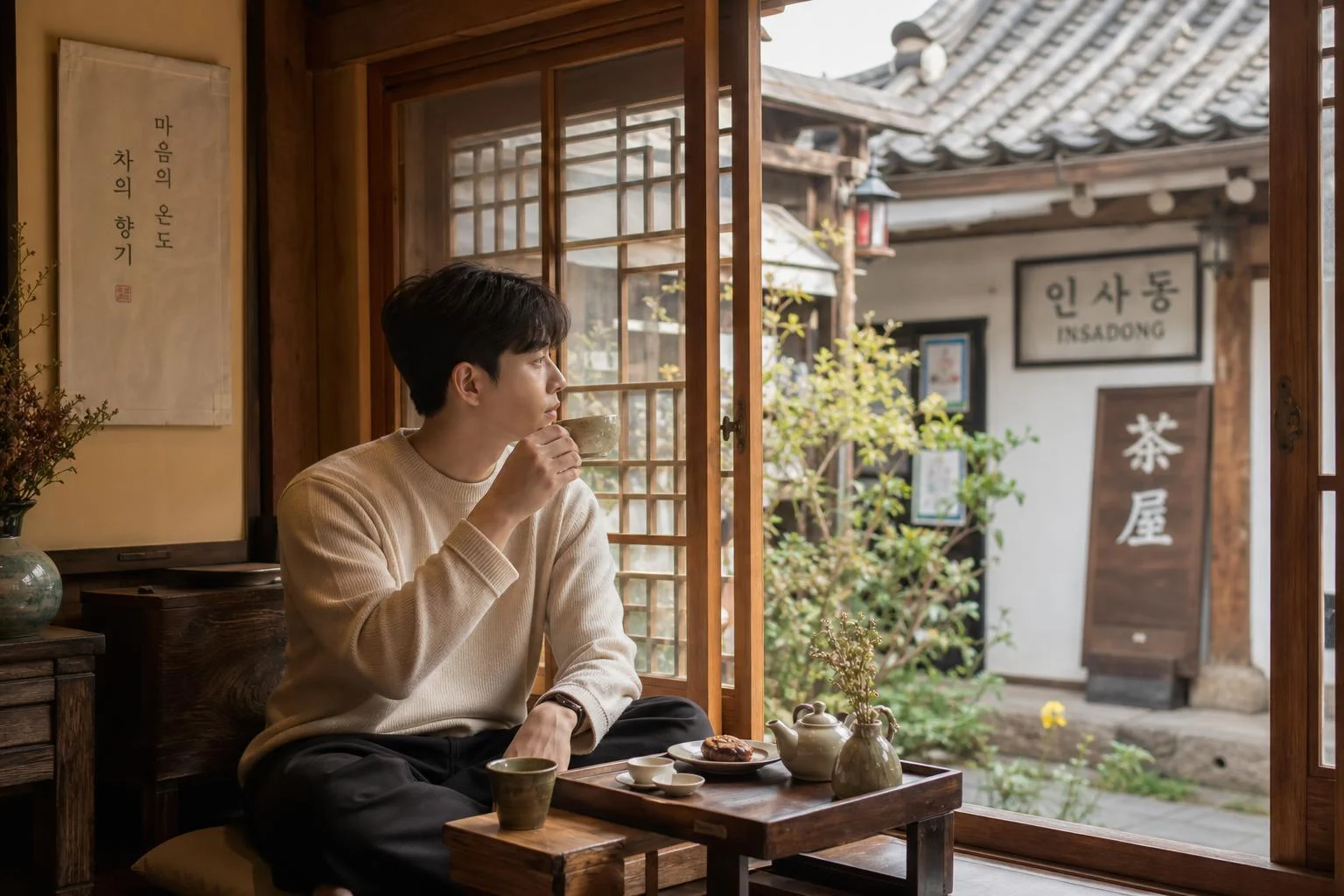
A person enjoying tea in a traditional Hanok tea house.
Insadong is truly a unique place. Centered around Insadong-gil in Jongno-gu, Seoul, it’s packed with galleries, calligraphy and pottery workshops, traditional craft shops, Hanbok experiences, traditional restaurants, and, of course, tea houses. It’s a quintessential “traditional culture tourist destination.”
Since the 2000s, with restrictions on vehicle traffic and the creation of a pedestrian-friendly street, Insadong has become even more of a “bustling entertainment district,” especially on weekends and holidays. You’ll find car-free street events, street vendors, and various performances. But it doesn’t stop there!
Modern Touches in Insadong 📝
- Annyeong Insadong: A complex cultural space blending modern and traditional.
- Insadong Central Museum: Features modern media art exhibitions.
- “Delight Seoul” Exhibition: (2020.12.18~2021.06.30, adult 18,000 KRW) This immersive media art exhibit at Insadong Central Museum reimagined Seoul’s streets and traditional beauty using digital technology. It showed that Insadong isn’t just a static traditional street but a dynamic, constantly reinterpreted space. You can read a review about it on ArtInsight.
So, it’s this fascinating mix of tradition and digital innovation, past and present. Amidst all this vibrancy and commercial energy, a traditional tea house tucked away in a quiet alley becomes “another face of Insadong”—a quiet, introspective side that’s truly a delight to experience.
Finding My Haven: A Traditional Hanok Tea House
Insadong is home to many wonderful traditional tea houses, each with its own charm. You’ll find places like Insadong Chatjip, the traditional tea house within the Beautiful Tea Museum, and many others converted from Hanok structures.
They all share a common goal: to offer traditional Korean teas and snacks. But their concepts, histories, and menus can differ. For example, Insadong Chatjip is famous for its homemade traditional teas and summer patbingsu (a traditional dessert made with red beans and shaved ice), with the red beans even prepared in-house!
The Beautiful Tea Museum in Insadong not only showcases traditional teas and tea ware (like teacups and teapots) but also operates a traditional tea house where you can enjoy a variety of Korean traditional teas. It’s open from 10 AM to 10 PM daily, making it a great spot for a relaxed visit even in the late afternoon or on weekends.
Many Insadong tea houses, including those featured on sites like HappyCow for foreign travelers, generally open around 10:00-10:30 AM and stay open until late evening. The tea house I chose followed a similar concept: a Hanok structure nestled in an alley, with low wooden floors, traditional paper doors, wooden pillars, and antique furniture, all contributing to a quiet atmosphere perfect for relaxation.
From City Roar to Gentle Whispers: The Sensory Journey Inside
The main street of Insadong, as I mentioned, is a favorite for tourists, filled with souvenir shops, street food, vendors, and busking performances. The background noise is pretty much constant. But as I turned into one of the smaller alleys, something magical happened.
The sounds of cars, music, and loudspeakers gradually faded. Instead, I started to notice the quiet beauty of Hanok eaves, stone walls, and old signboards. It was a complete sensory shift. The entrance to my chosen traditional tea house, like many others, was simple: a wooden sign, a small plaque, and a traditional Hanok gate or glass door. Many places require you to take off your shoes before entering, which makes the boundary between inside and outside feel like a clear line between noise and tranquility.
The Sounds of Serenity 🎧
- The soft creak of wooden floors underfoot.
- Quiet conversations, almost whispers.
- The gentle bubbling of water in a teapot.
- The subtle clink of teacups.
Inside, the echoing sounds of the narrow alley disappeared, replaced by these soft, calming noises. Places like the Beautiful Tea Museum even have pottery and tea ware on display, with walls adorned with teacups, teapots, handwritten calligraphies, and old wooden furniture. This visual and auditory environment creates a striking contrast with the bustling street outside. This journey from the main street to the alley and into the Hanok interior, though only a few hundred meters, felt like a profound shift from external stimulation to inner focus. If you’re planning a trip to the city, check out this guide to Insadong for more insights.
The Art of Choosing Tea: Menu, Prices, and My Pick
The menus at Insadong’s traditional tea houses typically feature over a dozen types of traditional teas, seasonal beverages, and light traditional snacks like dasik (traditional Korean sweets), hangwa (traditional Korean confectionery), and tteok (rice cakes).
Popular traditional teas include Jujube tea (Daechucha), Citron tea (Yujacha), Ginger tea (Saenggangcha), Ssanghwa tea (Ssanghwacha), Omija tea, Chrysanthemum tea, green tea/matcha, and Plum tea (Maesilcha). Each tea is often introduced with its health benefits, such as improving blood circulation, relieving fatigue, aiding digestion, or preventing colds.
Traditional Tea House Menu & Pricing 💰
| Tea Type (Example) | Typical Price Range (KRW) | Key Characteristics |
|---|---|---|
| Daechucha (Jujube Tea) | 7,000 – 10,000 | Sweet, mild, warming, aids digestion. |
| Ssanghwacha (Herbal Tea) | 9,000 – 12,000 | Deep herbal aroma, slightly bitter, good for fatigue. |
| Patbingsu (Seasonal) | Around 10,000 | Shaved ice with red beans, a refreshing summer treat. |
The price for a cup of tea generally ranges from 7,000 to 12,000 KRW, with special blends or handmade fruit teas sometimes going up to the mid-10,000 KRW range. Some places, like the Beautiful Tea Museum (you can see more about it in this Naver blog post), even offer “traditional tea experience sets” or “tea tasting” menus, which are great for foreigners or those new to Korean traditional teas.
I chose a Daechucha. I wanted something that wasn’t too caffeinated and would help me relax. Daechucha, with its sweet and gentle flavor, known for warming the body and aiding digestion, seemed like the perfect choice for my peaceful afternoon. If it had been summer, I might have gone for the Patbingsu, which is also a popular choice!
Mindful Moments: The Ambiance of a Traditional Tea House
The moment you step into a traditional tea house in Insadong, you’re enveloped in an atmosphere that instantly slows you down. These places, including the Beautiful Tea Museum, typically feature a Hanok structure with wooden floors and ondol (underfloor heating) rooms, low tables, cushions or traditional Korean chairs, traditional patterned windows, and exposed wooden pillars and beams. It’s an interior design that speaks volumes about Korean heritage.
While waiting for my tea, I found my eyes wandering. In places like the Beautiful Tea Museum, various tea wares from the Joseon and modern eras are displayed: teacups, teapots, tea bowls, tea caddies, and tea tables. You can spend your time simply looking at these exhibits, naturally learning about the history of Korean tea ceremony and changes in ceramic culture.
Details That Create Serenity ✨
- Small ceramic artworks and traditional wooden furniture.
- Old books, handwritten manuscripts, and folk art-style paintings.
- Dapo (tea mats) placed beneath teacups.
These items aren’t just functional tools; they are also conduits that show “layers of time.” The aged tea wares and wooden furniture remind you that this isn’t just a commercial space, but a place where tea culture and aesthetic appreciation have accumulated over generations. During the 5 to 10 minutes it took for my tea to be prepared, I naturally put my smartphone down and simply observed. My gaze lingered on the exhibits, the small items around me, and the slow, deliberate movements of the staff. It was an experience that increased the “density of observation” rather than the quantity of information.
Especially watching the tea being brewed, hearing the water boil, and seeing the tea poured from the pot into the cup – these simple, repetitive rhythms offered a sense of stability that’s hard to find in everyday life. It felt truly calming.
A Quiet Afternoon: The Taste, Aroma, and Inner Peace
The Daechucha or Ssanghwacha served at traditional tea houses is usually warmed or brewed after you order it. The tea arrived in a beautifully crafted cup, at a perfect temperature—around 60-70 degrees Celsius—warm enough to be comforting but not too hot to burn my tongue. The first sip was pure bliss. The sweet, earthy taste of the jujube tea was instantly soothing, and its subtle aroma filled my senses. It was a moment of pure contentment.
Sitting there, I felt a noticeable shift in my mood. The gentle warmth of the tea spread through me, and the quiet ambiance allowed my mind to truly relax. There was no rush, no pressure, just the simple pleasure of the present moment. It was a perfect contrast to the bustling Insadong streets just outside the alley. This quiet afternoon at a traditional Insadong tea house was exactly what I needed.
Key Takeaways: Insadong Tea House Escape
📚 Recommended Reads
Frequently Asked Questions ❓
My afternoon at the traditional tea house in Insadong was a truly rejuvenating experience. It reminded me that even in the heart of a bustling city like Seoul, you can always find pockets of peace and tranquility if you know where to look. I hope my journey inspires you to seek out your own quiet haven. If you have any questions or want to share your own experiences, please feel free to leave a comment below!