

📋 Table of Contents
Have you ever wondered what makes Korea so unique? I mean, beyond the K-Pop and K-Dramas we all love, there are so many interesting little things that make up the rich tapestry of Korean culture. Sometimes, it feels like there’s a whole hidden world of traditions and modern quirks just waiting to be discovered, right?
From ancient heating systems that kept people warm for centuries to modern internet slang that changes faster than you can say “flex,” Korea truly offers a fascinating blend of old and new. I remember being so surprised when I first learned about some of these facts, and I think you might be too!
So, if you’re curious to dive into some truly fun facts about Korea, you’ve come to the right place. Let’s explore these amazing insights together, one by one!
Ondol: Korea’s Ancient Secret to Warmth
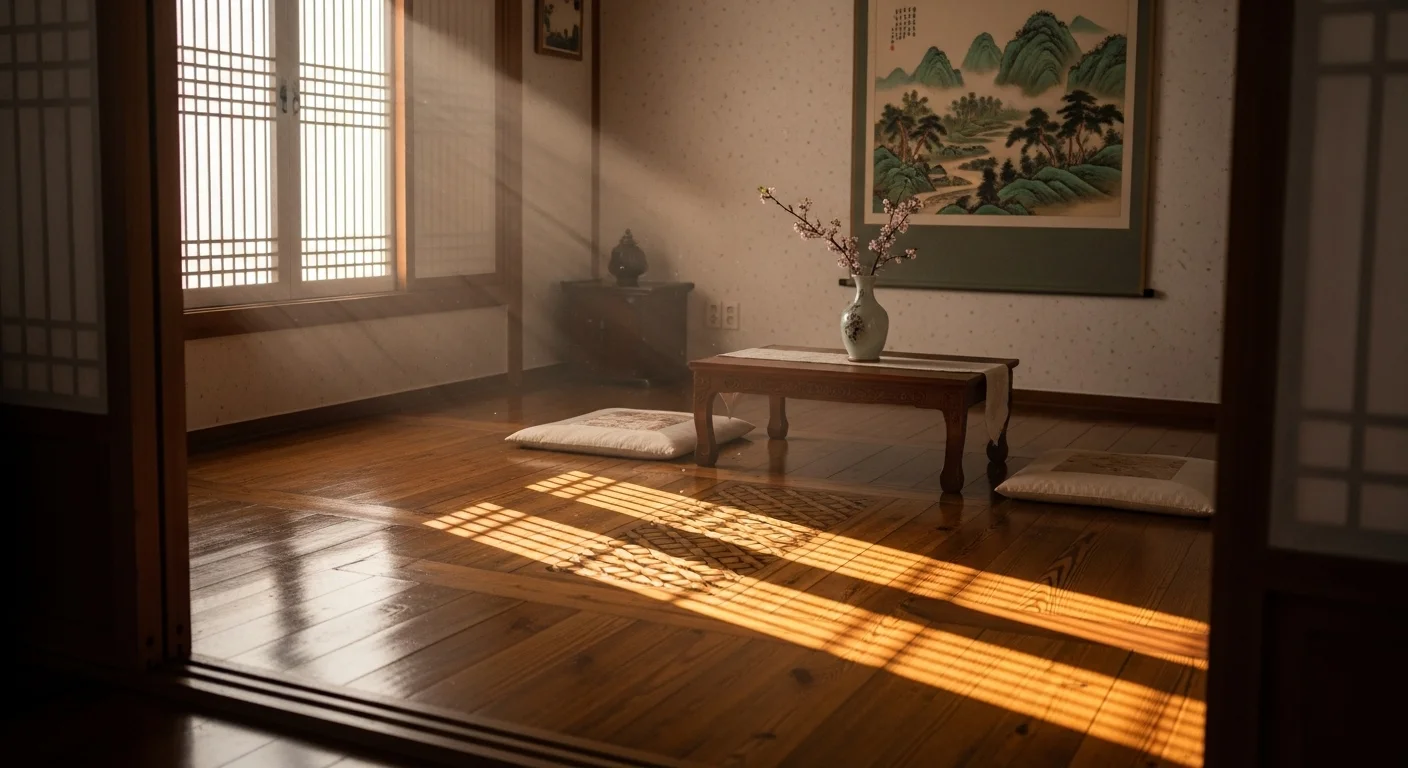
A traditional Korean home interior with a warm ondol floor.
When we think about staying warm in winter, most of us probably imagine radiators or electric heaters, right? But long, long ago, Koreans developed something truly ingenious: Ondol (온돌). This traditional underfloor heating system is actually one of the oldest in the world, dating all the way back to the Goguryeo (고구려) era, from 37 BC to 668 AD!
Imagine a system where a fire is lit in a furnace, and the smoke travels through special pathways (called “gorae,” 고래) under the stone floor, heating it up. It’s such a clever way to fight off those super harsh Korean winters, where temperatures can often drop below -10℃. The best part? Once the fire goes out, the floor stays warm for a really long time—sometimes over 24 hours! This makes it incredibly energy-efficient, even by today’s standards. I think it’s just amazing how ancient technologies often hold such valuable lessons.
Even now, in modern Korean apartments, you’ll find a modified version of Ondol, showing just how deeply ingrained this system is in daily life. It’s so unique that it’s even recognized as a UNESCO Intangible Cultural Heritage. It really highlights the ingenuity of ancient Koreans.
Key Features of Ondol 📝
- Origin: Dates back to Korea’s Goguryeo Kingdom (37 BC–668 AD).
- Mechanism: Fire heats stones under the floor, and smoke circulates through channels.
- Efficiency: Retains heat for over 24 hours after the fire is extinguished.
- Modern Use: Adapted for contemporary apartment heating systems.
- Status: Recognized as a UNESCO Intangible Cultural Heritage.
Why Koreans Avoid the Number 4?
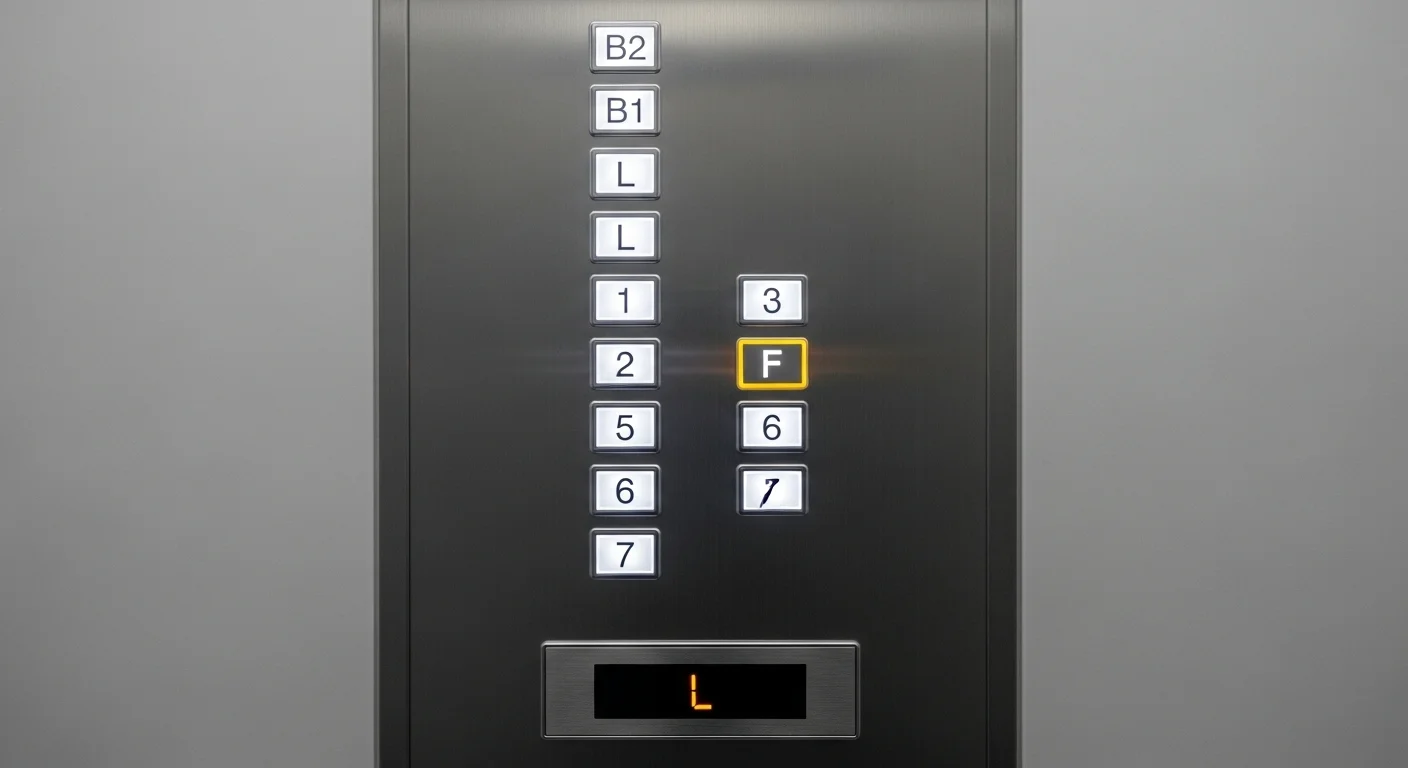
A modern elevator panel without the number 4 button.
Here’s a fun fact about Korea that might seem a little spooky: many Koreans avoid the number 4! Why? Because the pronunciation of “four” (사, sa) is the same as the Chinese character for “death” (사, sa). This superstition has been around since the Joseon (조선) Dynasty (1392-1910) and is quite deeply rooted in the culture.
You’ll often see this in daily life. For example, in many tall buildings or hospitals, the 4th-floor button in the elevator might be skipped entirely, or it might be replaced with an “F” for “Four.” Even numbers like 44 are sometimes avoided. It’s not just Korea, either; other East Asian cultures share this superstition. It’s just one of those things that really shows how language can influence beliefs and even architecture!
Interestingly, this belief can even affect things like real estate prices. Apartments or rooms with numbers containing 4 might be priced 5-10% lower than others. It’s a small detail, but it speaks volumes about cultural values. I find it fascinating how a simple homonym can have such a wide-ranging impact.
Where You’ll See the Number 4 Avoided 🚫
- Elevators: 4th-floor buttons are often skipped or labeled ‘F’.
- Building Floors: High-rise buildings may omit the 4th floor altogether.
- Real Estate: Properties with the number 4 in their address or unit number may be cheaper.
- Hospitals: Particularly sensitive areas, often avoiding the number.
The Unique Story Behind Korean Metal Chopsticks
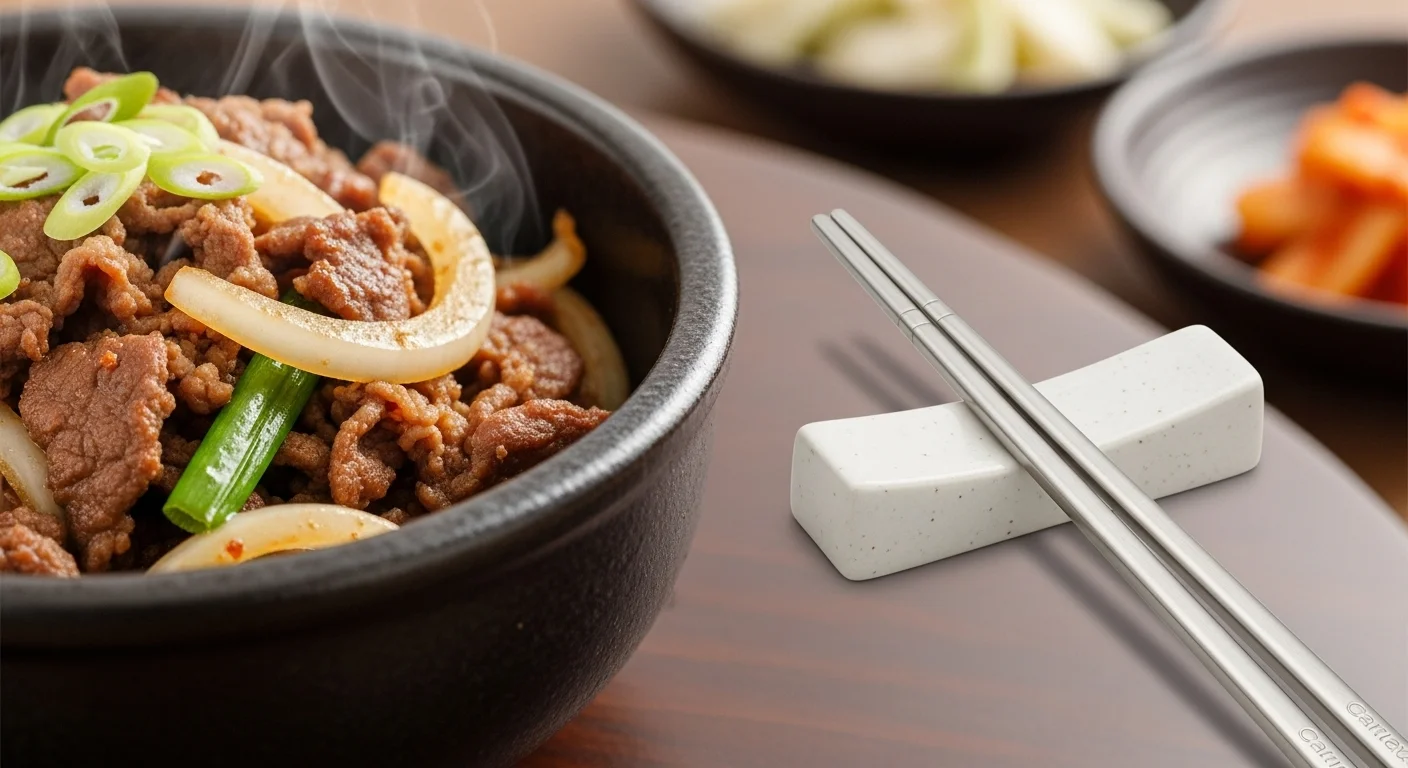
Close-up of modern Korean metal chopsticks and a bowl of food.
If you’ve ever eaten Korean food, you’ve probably noticed something distinct: the chopsticks are made of metal! This is quite different from the wooden or plastic chopsticks you typically find in China or Japan. But there’s a fascinating history behind this unique Korean custom.
Back in the Joseon (조선) Dynasty, especially during the reign of King Sejong (세종대왕, 1418-1450), silver chopsticks were used as a clever way to test for poison in food. If the food contained poison, the silver would change color. How smart is that? It really shows how practicality and safety were considered even centuries ago.
Today, Korean chopsticks have evolved into flat, lightweight stainless steel tools, usually around 20-22cm long and weighing about 20g. They’re perfect for picking up sizzling Bulgogi (불고기) or scooping out hot Sundubu-jjigae (순두부찌개), which is often served at 80-90℃. Their hygiene and durability are definitely a plus. I personally think they’re super practical once you get the hang of them!
| Country | Material | Shape/Features |
|---|---|---|
| Korea | Metal (Stainless Steel, historically Silver) | Flat, lightweight, often with decorative ends |
| China | Wood, plastic, sometimes metal | Longer, often thicker, round or square |
| Japan | Wood, plastic | Shorter, pointed tips |
Korea: The World’s Biggest Garlic Lover
Do you love garlic? Well, Koreans take that love to a whole new level! Seriously, Korea holds the title for the world’s highest per capita garlic consumption. In 2023, the Ministry of Agriculture, Food and Rural Affairs reported that Koreans consume an average of 6.2kg of garlic per person annually. That’s a lot of garlic!
Garlic isn’t just an ingredient in Korea; it’s a staple, a cornerstone of countless dishes. Think about it: Kimchi (김치), the national dish, uses tons of garlic. There’s also garlic jangajji (마늘장아찌), which is pickled garlic. It’s truly essential to the Korean diet and cooking style. I can’t imagine Korean food without that distinct garlicky flavor.
Beyond its delicious taste, garlic is also celebrated for its health benefits. The compound allicin, found in garlic, is known to promote blood circulation and help prevent vascular diseases, potentially reducing the risk of myocardial infarction by 30%. This isn’t a new discovery; its medicinal properties were even recorded in the Donguibogam (동의보감), a medical text compiled during the Three Kingdoms (삼국시대) period and published in 1613. It’s a testament to how traditional knowledge often aligns with modern science.
Allicin, a key compound in garlic, is scientifically proven to improve blood circulation and help prevent various cardiovascular diseases. It’s a natural boost for your heart health!
From ‘Naega Gojarani’ to Global: The Rise of Korean Memes

A young person laughing while watching a popular Korean meme on a smartphone.
If you’re active online, you know memes are everywhere! Korea has its own incredibly vibrant meme culture, and it’s fascinating to see how it has evolved. Korean internet memes really took off in the late 2000s, often originating from online communities like “Hapilgael” (합필갤) on DC Inside.
One of the most iconic examples is ‘Naega Gojarani’ (내가 고자라니), which means “I’m a eunuch!” This meme, a parody of a scene from the drama ‘Ya-In Sidae’ (야인시대), gained massive popularity around 2008 and has continued to be relevant for over a decade. It even reappeared in a 2020 episode of MBC’s ‘Hangout with Yoo’ (놀면 뭐하니?), showing its lasting impact in East Asia. It’s truly an enduring classic in Korean internet culture.
Unlike global memes that sometimes originate from platforms like 4chan (like Nyan Cat from 2011), Korean memes often focused on audio-visual mashups and syntheses. However, since the 2020s, there’s been a trend towards Westernization, with memes like ‘WASTED’ (from GTA Online, released in 2013) gaining traction. It’s a dynamic landscape, and I’m always amazed at how quickly new trends emerge and spread, especially among the MZ generation (millennials and Gen Z).
Korean Meme Evolution Highlights 📈
- Early 2000s: Emerged from online communities like DC Inside’s Hapilgael.
- Iconic Meme: ‘Naega Gojarani’ (I’m a eunuch!), a drama parody from 2008.
- Characteristic: Often audio-visual mashups and syntheses.
- Modern Trend: Increasing Westernization, adopting global meme formats.
- Influence: Widely used by the MZ generation (85% in 2025).
Decoding MZ Generation Slang in Korea
Speaking of the MZ generation, if you’ve ever tried to understand conversations among young Koreans, you might have felt a bit lost! That’s because they use a lot of unique slang and new words, often called “sinjueo” (신조어). According to a 2025 survey by Preply, 85% of respondents from the MZ generation use these new words and memes regularly.
The top slang words are pretty interesting. ‘Eoljukah’ (얼죽아), which literally means “Even if I freeze to death, iced Americano” (from 2024), was ranked number one. Number two was ‘Flex’ (플렉스), a term borrowed from English to mean showing off. What’s more, about 64% of these new words are loanwords from other languages, like ‘Holy Moly’ (홀리몰리) or ‘G.O.A.T’ (고트). Others are clever abbreviations, like ‘Aljalttakkkalssen’ (알잘딱깔쎈), which means “Do it smartly, precisely, neatly, and perfectly.”
These new words and slang have spread rapidly since the late 2010s, primarily through memes and social media. They’re often centered around the Seoul metropolitan area, highlighting how language evolves and spreads within specific communities. It’s like a secret language that you need a guide to understand, and I think it’s a super fun way to see how culture is constantly changing!
- Eoljukah (얼죽아): “Even if I freeze to death, iced Americano.”
- Flex (플렉스): Showing off, displaying wealth or achievements.
- Aljalttakkkalssen (알잘딱깔쎈): “Do it smartly, precisely, neatly, and perfectly.”
- G.O.A.T (고트): Greatest Of All Time.
Key Takeaways: Fun Facts About Korea
📚 Recommended Reading
Frequently Asked Questions ❓
Well, wasn’t that a fun journey through some of Korea’s most interesting and unique facts? From the warmth of ancient Ondol to the rapid-fire slang of the MZ generation, Korea truly is a land of fascinating contrasts and rich culture. I hope you’ve enjoyed discovering these hidden gems and now feel a little more connected to this incredible country.
There’s always more to learn and explore, and these fun facts about Korea are just the tip of the iceberg. If you have any more questions or want to share your own favorite Korean fun facts, please feel free to leave a comment below! I’d love to hear your thoughts.