
📋 Table of Contents
- 1.Discovering Temple Stay: A Journey to Inner Peace
- 2.Finding Your Retreat: Recommended Temples for Silence
- 3.Planning Your Silent Escape: Booking and Preparations
- 4.Embracing the Silence: Rules and Daily Practices
- 5.The Full Experience: From Dawn to Dusk in a Temple
- 6.Reflecting and Reconnecting: Concluding Your Temple Stay
Have you ever felt completely overwhelmed by the constant noise of daily life? I know I have! It feels like there’s always something demanding our attention, right? From buzzing phones to endless to-do lists, finding a moment of true peace can feel impossible.
But what if there was a way to truly unplug, recharge, and reconnect with yourself? That’s exactly what a Temple Stay in Korea offers: a unique opportunity for 24 hours of silence in the tranquil embrace of mountain temples. It’s more than just a trip; it’s a journey into mindfulness and inner calm. Let’s explore everything you need to know about this amazing experience!
Discovering Temple Stay: A Journey to Inner Peace
So, what exactly is a Temple Stay? It’s a special program where you get to experience the daily life and culture of a traditional Korean Buddhist temple. It started in the early 2000s, spearheaded by the Ministry of Culture and Tourism, and now over 150 temples across the country offer it. Imagine escaping to a peaceful mountain setting, far from city lights and sounds, for a full 24 hours of silence.
Temple Stay Types 📝
- Day Trip (Dangil-hyeong): Shorter experience, usually a few hours. Costs range from free to 30,000 KRW.
- Experiential (Cheheom-hyeong): Overnight stay, focusing on cultural activities like making 108 bows or tea ceremonies. Costs 70,000-120,000 KRW per night.
- Resting (Hyusik-hyeong): Overnight stay, emphasizing relaxation and quiet contemplation with fewer structured activities. Costs 50,000-100,000 KRW per night.
The main goal of a Temple Stay is to help you relax, clear your mind, and find a sense of inner calm. Whether you choose a resting or experiential type, adhering to the silence rule and participating in activities like ceremonial meals (Yebul) and meditation (Seonmyeongsan) are key parts of the experience.
Finding Your Retreat: Recommended Temples for Silence
If you’re looking for a truly immersive silent retreat, some temples are particularly well-suited. I’ve found two excellent options that are perfect for a 24-hour silence program.

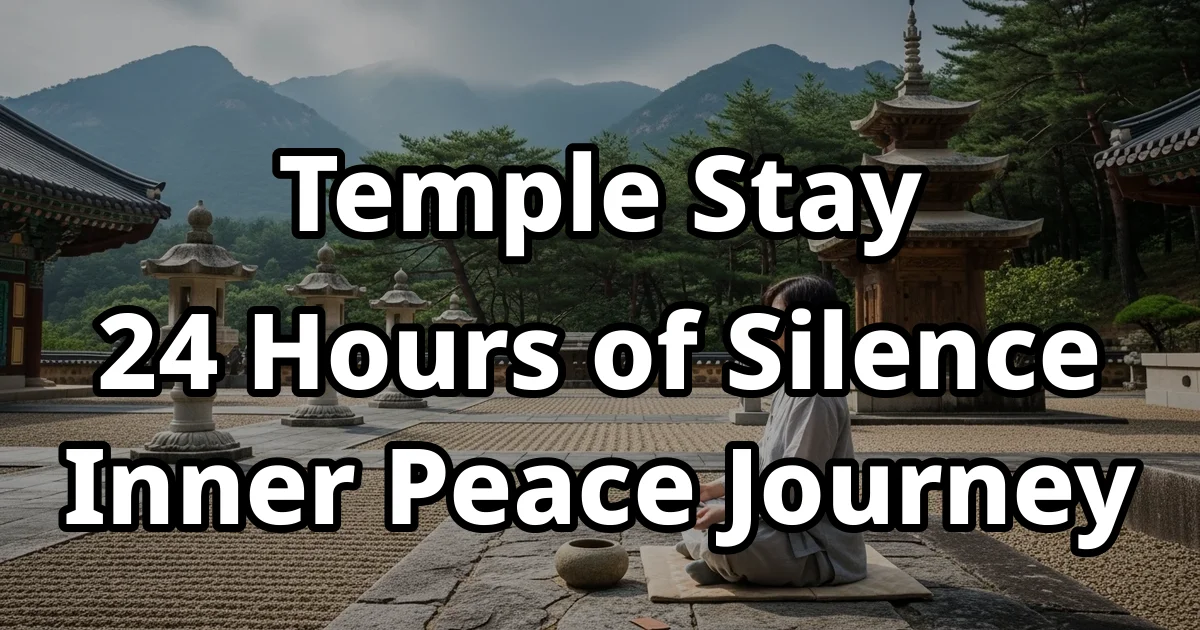
A person meditating peacefully in a serene temple setting.
Recommended Silent Retreat Temples 🗺️
| Temple Name | Location | Key Features |
|---|---|---|
| Gounsa (고운사) | Uiseong-gun, Gyeongsangbuk-do | “Happiness Doubled Temple Stay” combines Seon meditation with pottery making. Experiential type, 80,000 KRW (2024). |
| Hakrimsa (학림사) | Gongju-si, Chungcheongnam-do | Focuses on basic spiritual practice, including exploring stone pagodas and Buddhist statues. Highly regarded cultural tourism resource by Gongju City. |
Both Gounsa and Hakrimsa are nestled in mountains over 500m above sea level, making them ideal for strict adherence to the silence rule. They typically expect at least 12 hours of silence during the 24-hour program. You can find more details about these temples and book your stay through the official Templestay website.
Planning Your Silent Escape: Booking and Preparations
Ready to book your Temple Stay? The process is quite straightforward! Most bookings are done through the official Templestay website, templestay.com. You’ll choose your check-in (usually 2-3 PM) and check-out (around 2 PM) dates, then select your desired region and program type.
Direct phone or fax bookings are generally not accepted; online forms are essential. An experiential overnight stay usually costs between 70,000 and 120,000 KRW, which often includes meals. Always confirm what’s included when booking!
What should you prepare for your Temple Stay? First, pack comfortable clothing suitable for light activities and sitting meditation. If you’re a foreign visitor, remember to bring your passport. For your 24 hours of silence, temples often ask you to deposit your mobile phone to fully embrace the experience. It’s truly a chance to disconnect from digital distractions and reconnect with yourself. Always check the specific requirements and program details on the temple’s page before your visit, as mentioned on the Gongju government site.
Embracing the Silence: Rules and Daily Practices
Once you check in, typically between 2 PM and 3 PM, your Temple Stay journey officially begins with an orientation. This is where you’ll learn about the temple’s specific rules and the eight precepts (Palgajegye) which guide the Buddhist way of life. These include principles like not killing, not stealing, and refraining from intoxicants.
Core Silence Rules & Practices 🚫🗣️
- 24 Hours of Silence: This is the most important rule. While some interactions like a monk’s tea ceremony are allowed, the primary goal is to maintain silence.
- No Mobile Phones: To truly disconnect, you’ll be asked to store your phone. This helps eliminate distractions and encourages introspection.
- Early Morning Wake-up: Expect to wake up around 4-5 AM, often to the sound of temple bells, followed by morning rituals.
- Participation in Rituals: Whether it’s the experiential type or resting, participation in morning and evening prayers (Yebul) and meditation (Chamseon) is a core part of understanding Buddhist daily life.
While some temples might allow personal items like instant noodles or coffee during free time, the emphasis always remains on maintaining a peaceful, silent environment. This dedicated period of quiet helps you turn inward and reflect, much like the experience at Amaravati Buddhist Monastery where guests observe similar precepts, or the silent retreats found in Japan. It’s a chance to truly listen to your own thoughts without external interruptions.
The Full Experience: From Dawn to Dusk in a Temple
A 24-hour Temple Stay is a carefully structured journey that guides you through the rhythms of temple life. It often begins in the evening, leading into a serene night and a mindful day.
A Typical 24-Hour Temple Stay Itinerary 🗓️
- Evening (6-7 PM): Evening Prayer (Yebul)
Participate in the chanting and bowing rituals. This sets a peaceful tone for the evening. - Evening (7-8 PM): Monk’s Tea Ceremony (Seunim Chadal)
A rare opportunity for quiet conversation with a monk, often involving a thoughtful discussion or a “hwadu” (topic for meditation). This is one of the few times speech is allowed. - Night (9 PM): Bedtime
Retire early for a deep, restful sleep in the quiet mountain air. The first few hours of silence often begin after the tea ceremony. - Early Morning (4 AM): Wake-up Bell & Morning Prayer
Awaken to the sound of temple bells. Join the morning rituals, which might include 108 bows (108-bae) – a meditative practice of full prostrations. - Morning (5-7 AM): Meditation (Chamseon) & Temple Chores
Engage in silent meditation, often followed by quiet cleaning or other communal tasks to cultivate mindfulness. - Morning (7 AM): Ceremonial Meal (Balugongyang)
Experience the traditional Buddhist meal, eaten in silence, where you learn to appreciate every grain of food without waste. Meals are typically vegetarian. - Daytime (After Balugongyang): Free Time & Nature Walk
Enjoy several hours of free time for silent contemplation, reading, or taking a peaceful walk around the temple grounds. Temples like Hakrimsa in Gongju often have beautiful stone pagodas to explore.
This structured yet flexible schedule allows for deep introspection. Many temples, like Gounsa and Hakrimsa, provide options for self-guided meditation during free periods. By maintaining silence, you create space for internal dialogue and a profound connection with nature, similar to silent retreats offered in the Himalayas or by Silent Stay Retreats.
Reflecting and Reconnecting: Concluding Your Temple Stay
As your 24-hour Temple Stay draws to a close, there’s usually a final morning prayer or meditation session around 1 PM. This is a chance to reflect on your experience, internalize the peaceful feelings, and set intentions before you check out around 2 PM.
Many participants report feeling a profound sense of peace, clarity, and renewed energy. The silence allows you to process thoughts, reduce stress, and gain new perspectives on your daily life. The advice from the monks can often become a lasting guide.
Returning to your regular routine after a silent retreat can feel a bit jarring at first, but the mental clarity and calm you’ve cultivated often stay with you. It’s truly an opportunity to hit the reset button, gain fresh insights, and rediscover your inner strength. Many reviews on templestay.com highlight how this mountain silence helps individuals reorganize their daily lives.
Key Takeaways from Your Silent Temple Stay
📚 Recommended Reads
Frequently Asked Questions ❓
Embarking on a Temple Stay for 24 hours of silence is a truly unique way to disconnect from the noise of the world and reconnect with yourself. It’s an opportunity to experience Korean culture, practice mindfulness, and find genuine inner peace in the serene beauty of mountain temples. I hope this guide has given you all the information you need to plan your own peaceful retreat. If you have any more questions, feel free to leave a comment below!