
📋 Table of Contents
- 1.Seongsu-dong: From Industrial Hub to Seoul’s Hottest Neighborhood
- 2.Seongsu vs. Gangnam: Location, Accessibility, and Unique Charms
- 3.A Historic Turn: Seongsu-dong’s Urban Regeneration Journey
- 4.Why Corporations Choose Seongsu: The MZ Generation’s New Business District
- 5.From Pop-up Hotspot to Lifestyle Hub: Seongsu-dong’s Evolving Culture
Hey there! Have you ever heard people say, “Seongsu-dong is the new Gangnam?” I know, right? It sounds a bit wild, considering Gangnam has always been *the* place to be in Seoul. But let me tell you, after spending a day exploring Seongsu, I totally get what they mean.
This neighborhood, tucked away in Seoul’s Seongdong-gu, used to be all about factories and shoemaking. But over the past decade, it’s transformed into this super cool, vibrant spot that’s drawing in young people, trendy brands, and even big tech companies. It’s truly fascinating how it changed from an industrial zone to a “hip place” without tearing everything down. Let’s dive into why Seongsu-dong is turning heads and why many are starting to see it as a serious contender to Gangnam’s long-held crown!
Seongsu-dong: Key Takeaways
Seongsu-dong: From Industrial Hub to Seoul’s Hottest Neighborhood
So, what exactly is this Seongsu-dong everyone’s talking about? Well, it’s located in Seongdong-gu, connecting seamlessly to Gangnam via Seongsu Bridge. This prime location makes it a crucial hub between Seoul’s northeast and Gangnam areas. It’s pretty strategic, if you ask me!
Historically, Seongsu was a bustling industrial zone, packed with factories, warehouses, and countless handmade shoe workshops. But something amazing started happening around 2010. Instead of tearing down the old, people began to renovate these abandoned spaces, turning them into stylish cafes, unique concept stores, and art galleries. This sparked its rise as a “hip place” or “hot place” in Seoul.
The Seongsu Transformation Timeline 📝
- Pre-2010s: Dominated by factories, warehouses, and manual shoemaking workshops.
- 2010s Onward: Beginning of urban regeneration; abandoned spaces converted into cafes, shops, galleries.
- 2014: Seoul City’s Urban Regeneration Project kicks off, focusing on renovation and supporting existing industries.
- Recent Years: Major brands and IT startups establish headquarters, solidifying Seongsu’s status as a trendy business and lifestyle center.
The turning point was really in 2014 when Seoul City initiated an urban regeneration project. Instead of large-scale demolition and redevelopment, they chose to preserve the area’s industrial heritage, supporting renovations and new businesses. This approach allowed brands like Gentle Monster and Musinsa to open their experimental flagship stores here first, drawing huge crowds and making Seongsu-dong a must-visit destination.
In recent years, companies like Krafton and Musinsa, along with various IT startups favored by the MZ generation, have moved their headquarters to Seongsu-dong. This influx has led media and real estate experts to suggest that Seongsu now holds higher investment value than Gangnam and is becoming a new business and commercial hub. Plus, it’s only about 7km (4 miles) from Gangnam Station, a quick 20-minute subway ride, so it’s super connected!
Seongsu vs. Gangnam: Location, Accessibility, and Unique Charms
Okay, let’s get down to the nitty-gritty: how does Seongsu-dong really stack up against Gangnam? On the surface, they’re both bustling districts, but their vibes are totally different. I mean, we’re talking about two distinct personalities here.
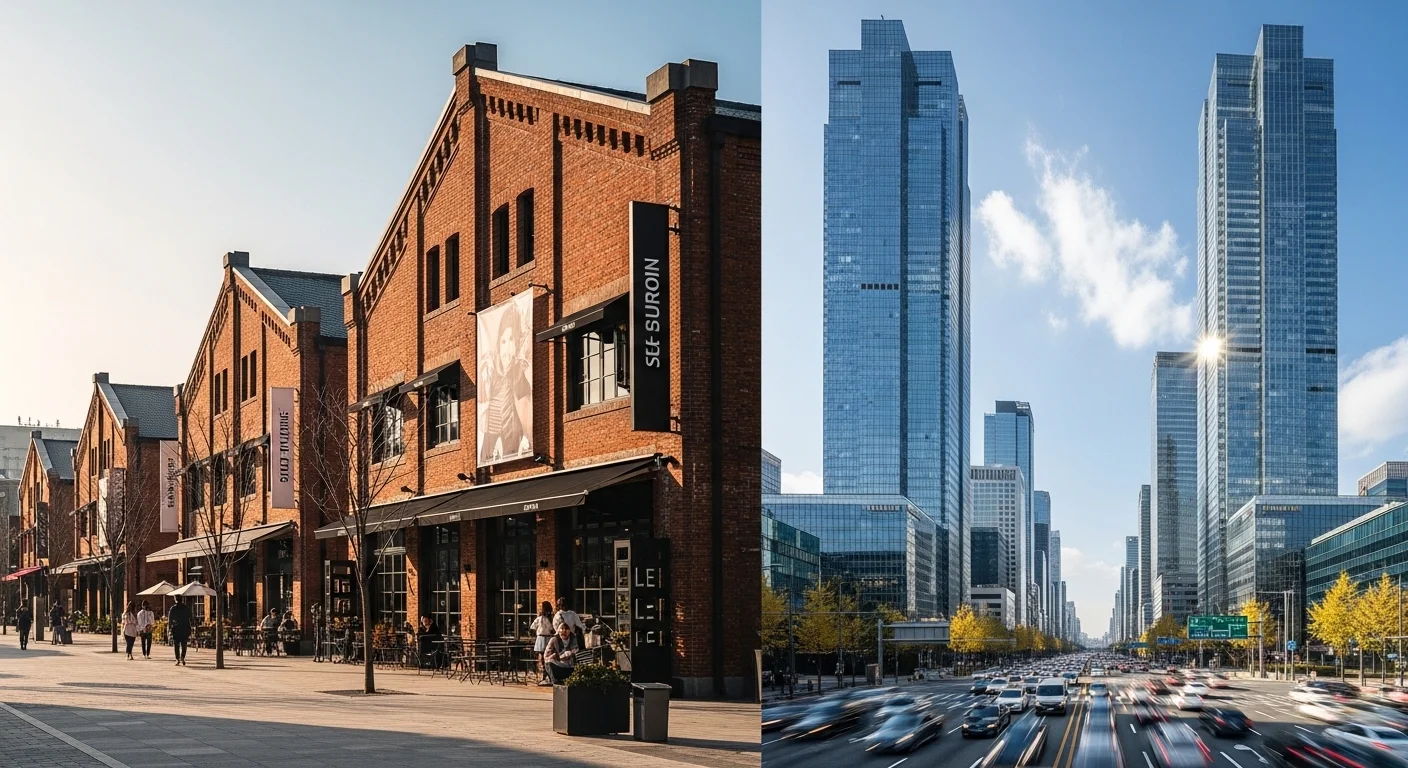
Comparing the unique characteristics of Seongsu-dong and Gangnam.
First, accessibility. As I mentioned, Seongsu-dong is quite close to Gangnam, about 7km away. You can get to Gangnam Station by subway in about 22 minutes, or even as fast as 12 minutes with a transfer! It’s also well-connected to other major areas like Yeouido and Gwanghwamun via subway Line 2 (Seongsu Station, Ttukseom Station), Bundang Line (Seoul Forest Station), Seongsu Bridge, and major expressways. So, getting around is pretty easy.
But here’s where they really differ: their roles and symbolism. Gangnam, for decades, has been Seoul’s ultimate CBD (Central Business District), known for finance, education, corporate offices, and luxury housing. Think huge investment firms, law offices, major corporate HQs, and fancy academies. It’s all about established power and wealth.
Seongsu-dong, on the other hand, is built on a foundation of handmade shoes and small-scale manufacturing, now blended with startups, culture, and experimental brands. It’s a “smaller and more flexible” commercial structure. Gangnam has towering office buildings and dense commercial spaces, but Seongsu is all about renovated low-rise factories, unique individual shops, alleyways, and pop-up stores. This means Gangnam is for mass consumption and large franchises, while Seongsu champions “experiential consumption” with branding experiments, limited editions, cafes, and exhibitions. It’s quite the contrast!
In the media, you’ll often hear phrases like “Seongsu instead of Gangnam” or “higher investment value than Gangnam.” This isn’t just about Seongsu being an alternative; it’s being seen as a second major axis competing directly with Gangnam. It’s pretty exciting to witness this shift!
A Historic Turn: Seongsu-dong’s Urban Regeneration Journey
To truly appreciate Seongsu-dong today, we need to look back at its roots. According to the Seoul History Archive, Seongsu is still the largest hub for handmade shoe manufacturing in Korea. It’s home to around 400 shoemaking businesses and about 100 related processing and material suppliers. Isn’t that incredible?
From the 1970s and 80s, shoemaking, leather, and sewing factories gathered here, drawn by affordable rents and good transport links, creating the renowned ‘Seongsu Handmade Shoe Street’. Even now, you’ll find shoe festivals and exhibitions here, keeping that history alive.
The Evolution of Seongsu-dong’s Landscape 🗺️
- Industrial Boom (1970s-80s): Becomes a major hub for shoemaking and light manufacturing due to low rents and good accessibility.
- Industrial Decline (2000s): Global shifts to cheaper manufacturing bases and changes in online distribution lead to the decline of local industries, leaving many empty factories and warehouses.
- Urban Regeneration (2014-Present): Seoul City and Seongdong-gu launch a unique urban regeneration plan, opting for remodeling and fostering new businesses rather than wholesale redevelopment. This preserves the area’s historical character while bringing in new life.
However, the 2000s saw a decline in these industries as production moved overseas and online retail changed the game. Many factories and warehouses became vacant or underutilized. That’s when the 2014 urban regeneration project came in, making a huge difference. Seongdong-gu and Seoul City chose a different path than the “tear down and rebuild” approach seen in Gangnam. They focused on remodeling, creating startup spaces, and improving alleyways.
This strategy allowed master artisans and new cultural content to coexist. Old factories, parking lots, and empty warehouses were transformed into cafes, galleries, co-working spaces, and trendy shops. It’s a wonderful example of how urban spaces can evolve while honoring their past!
Looking ahead, Seoul City has even bigger plans, conceptualizing ‘Seongsu-dong 2.0’ with a ‘3-axis development’ strategy. This aims to grow Seongsu beyond just a hot spot into a major center for industry, residential living, and business. The plan involves developing Seoul Forest surroundings, the Han River waterfront, and internal residential areas to ensure balanced growth of eco-friendly business districts, residential improvements, and commercial/cultural facilities.
Why Corporations Choose Seongsu: The MZ Generation’s New Business District
It’s not just cafes and shops anymore; big businesses are making a move to Seongsu-dong. The most symbolic example is Musinsa, Korea’s top fashion platform, with sales around 1 trillion KRW! They invested over 130 billion KRW to build their headquarters and a complex space in Seongsu, not Gangnam. This definitely shows a trend!
According to a related analysis, Musinsa chose Seongsu because the neighborhood already had the “hip, cultural, startup, cafe, and exhibition” ecosystem that aligns with its brand image and target consumers. Plus, the area offered significant potential for future value appreciation compared to initial rent and building purchase costs. Smart move, right?
| Company | Industry | Seongsu Presence |
|---|---|---|
| Musinsa | Fashion Platform | Headquarters & Complex (130B+ KRW investment) |
| Gentle Monster | Eyewear & Lifestyle | New HQ (2025 target) & Flagship Store |
| Krafton | Game Developer | New HQ at E-Mart site (2027 target) |
Gentle Monster, famous for its avant-garde flagship stores, is also planning a new headquarters and a large-scale cultural complex in Seongsu, aiming for completion in 2025. Their existing Seongsu flagship store, with its unique interior and exhibition-like atmosphere, has already made Seongsu a “Gentle Monster mecca,” drawing tourists. And let’s not forget Krafton, the gaming giant, which is building a massive new headquarters on the former E-Mart site, targeting completion in 2027. This means a huge surge in IT, gaming, and content industry professionals, further cementing Seongsu-dong as an “MZ generation business district.”
So, why are these companies choosing Seongsu over Gangnam? According to real estate and economic YouTube channels, the reasons include relatively lower land and building prices with high future appreciation potential, synergy with a lifestyle commercial district full of cafes, restaurants, and exhibitions that employees love, proximity to leisure spaces like Seoul Forest and the Han River, and the crucial “hip office location” branding effect that appeals to MZ talent. It’s a holistic package that’s hard to resist!
From Pop-up Hotspot to Lifestyle Hub: Seongsu-dong’s Evolving Culture
Over the past few years, Seongsu-dong earned the nickname “Pop-up Holy Land.” Seriously, every major and small brand seemed to open a pop-up store here! Empty factories and warehouses were rented out short-term, and these limited-period pop-ups spread like wildfire on social media and YouTube. It created a phenomenon where the MZ generation would say, “This month, it’s Seongsu!” and flock to the area.
But it’s not just pop-ups anymore. Seongsu has become a permanent destination for lifestyle and culture. You’ll find huge cafes converted from old industrial buildings, specialty coffee shops, and trendy brunch spots on every corner. It’s truly a “cafe hopping” paradise! Flagship stores and concept shops from brands like Gentle Monster, Musinsa, and various fashion/lifestyle labels have created an image of Seongsu as the place to experience “new and limited edition items first.”
Seongsu’s Integrated Work-Life Lifestyle 🚶♀️💼
- Work: Home to IT, startup, and content companies.
- Lunch: Endless choices of unique cafes and restaurants.
- After Work: Art exhibitions, brand flagships, shoemaking streets, Seoul Forest, and Han River walks.
- Result: A seamless “work-life integrated commercial district” where everything is within reach.
Bloggers and economic channels analyze that Seongsu-dong is evolving from a pop-up hot spot into an “MZ generation business district.” As IT, startup, and content professionals work in Seongsu, they find that they can handle their commute, lunch, and after-work leisure all within the neighborhood. It’s become a true work-life integrated commercial district.
This shift has led to an increase in tourism and longer stay-type consumption. On weekends and holidays, Seongsu rivals Gangnam and Hongdae in crowds, with people enjoying a full day’s itinerary: visiting exhibitions, exploring brand flagships, walking the shoemaking streets, and relaxing at Seoul Forest or by the Han River. This extended stay naturally leads to increased spending, changing the area’s economic structure. It’s amazing to see how much Seongsu-dong has grown and continues to thrive!
📚 Recommended Articles
So, is Seongsu-dong the new Gangnam? Well, I think it’s fair to say it’s carving out its own unique identity, offering something different yet equally compelling. This former industrial area has truly blossomed into a dynamic hub for culture, work, and lifestyle, especially appealing to the MZ generation. Its urban regeneration story is a fascinating one, and it continues to evolve at an incredible pace. I hope this exploration of Seongsu-dong helped you understand why it’s become one of Seoul’s hottest neighborhoods! If you have any questions or want to share your own Seongsu experiences, feel free to leave a comment below.